
Surviving Ultra

Because DFL is still an accomplishment

Blog

  • MTI Mountaineering and Hiking Prep Plan

    I really enjoyed this month-long training plan and it provided the perfect mix of training for the surprisingly snowy winter we have had so far.  I loved the simplicity of the plan – 2 days of ever-increasing step ups with a 30-pound pack, two bodyweight strength days, and one running day each week.  The plan was a great way to get aerobic base building in a sport specific way even when the weather didn’t support an outdoor run.  It was a straightforward and simple but highly effective plan that would serve anyone who is prepping for hiking season well. 

    I liked the specificity of the plan so much that it generated an interest in running more mountain plans from Mountain Tactical Institute and I have decided to spend the next few months going through their Greek Heroine packet of plans.  The plans are designed to achieve a strong base level of fitness for mountain athletes.  I have started Helen the first plan in the series and am looking forward to seeing where it takes me.

  • Born to Walk

    I recently completed the book Born to Walk by Mark Sisson and found the premise of the book that humans have evolved to walk extensively each day quite compelling and consistent with my personal (albeit anecdotal) experience with walking.  What I especially appreciated was the coverage of the book with regards to the importance of low intensity training and how even walking in zone 1 or more purposeful walking in zone 2 can still have huge aerobic base building benefits without being as physically taxing as running. 

    While I don’t see myself giving up running any time soon, the book has made me make some adaptations to how I have been approaching my training.  I have been using a standing desk for a while now and rarely sit down during the day, but the arguments in the book pushed me to take it one step further and spring for a walking pad for under my desk. I’m still following the Mountaineering and Hiking Prep plan I’ve been running in an unmodified form, but have added a couple of hours of zone 1 walking to my daily routine.  I’ve had no issues with recovery with the added zone 1 work so far and intend to continue the practice going forward.  It seems an efficient way to add volume and time on feet in a non-taxing way and one I plan on continuing as long as recovery doesn’t present an issue. 

  • Fun in the Snow

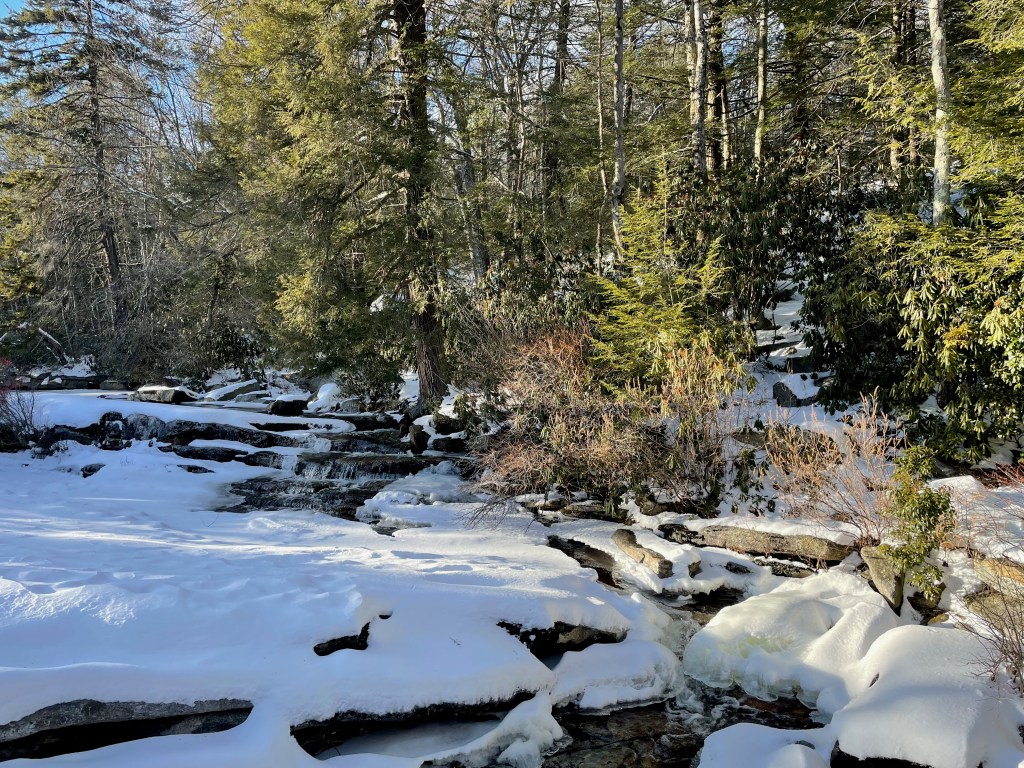
    My aerobic base building block has been going well and I can feel my running-based conditioning coming back quickly, but winter snow has definitely hit earlier than expected this year with 3 snow storms hitting to date.  Part of me never grew up and still loves to play in the snow so it’s been great to get out, strap some crampons on, and hit the snow-covered trails, such as some recent exploration of Minnewaska Park’s Lower Awosting Trail and Blueberry Run Footpath. 

    While I don’t mind training outside in the winter, the recent storms have had me make some modifications to my current training block.  On the first of the stormy days where conditions meant it would have been unsafe to run, I replaced a run with some sport specific gym-based exercises in the form of high repetitions of step ups with a 30-pound rucking plate on my back. This workout came from Mountain Tactical Institute’s Mountaineering and Hiking Prep plan and additional snow storms led to my decision to stick with it.  The plan contains two days of step ups, two total body strength days, and one running day.  The step ups and circuit-based strength days still provide a great aerobic benefit and the running in the plan still allows me to continue to practice my form.  I have made the weekly run a bit longer than the plan calls for though and have taken advantage of the 5 day a week layout of the plan to sneak an extra day of hiking or trail running in if I’m feeling up to it. The plan is a recommended entry point for their more advanced mountain running and hiking plans and I see myself following this plan up with one of them. 

  • Coros Base Plan Week 1 Thoughts

    While taking some time out to run AthleanX’s Max Shred and Monster Maker plans with some maintenance running and hiking added in turned out to be a worthwhile detour, it was nice to get back to something more running focused.  After pursuing the 2 AthleanX plans while following a Macrofactor cut strategy, I’m down almost 20 pounds and have a much better strength to body weight ratio.  I’ve shifted back to maintenance calories in Macrofactor for this block.  I’m sticking to zone 2 for this aerobic base building block and the weight reduction has helped with my zone 2 pace on the distances I’ve run so far.  The runs definitely feel easier.  I’m also enjoying how Coros has the mileage divided up throughout the week.  The plan starts with the mileage spread out across 4 days a week and starting in week 3 becomes a 5 day a week plan with 4 running days and one aerobic cross training day.  In the final two weeks it replaces the cross training day with a 5th running session. I’ve been using the first two Coros scheduled rest days to incorporate strength sessions using the tactical barbell fighter template so far, but will need to adjust this strategy a bit once week 3 hits with its extra cross training workout. I’ve completed the first week with 18.5 miles run and 3822 feet of elevation gain.  Looking forward to the next 9 weeks. 

  • Coros Beginner Runner Base Plan

    If I consider where I stand now I have a high level of general physical preparation and very high work capacity, which is why I do well in steep Ultra’s, but I do need to really up my game with regards to my aerobic base as this is what holding me back on flatter courses and ultimately preventing me from unlocking even better performances on the steep ones. I intend to do an extensive aerobic base build over the next 6+ months or so. 

    To start off this base build, I’m going to start off with the Coros Beginner Runner Base Plan which is a 10 week plan designed to take a runner up from running 15 miles a week up to 30.  I will be pairing this plan with Tactical Barbell (TB) fighter strength template which I used when I performed a TB Base Build earlier in the year.

    For my Fighter exercise cluster, I intend to use Bench Press, Weighted Pull Ups, and a Trap Bar Deadlift as the exercises.  This will get to me running higher mileages than I have been while keeping some strength in the mix and will form a solid foundation for whatever more advanced aerobic base building plan I decide to continue with from there.

  • AthleanX Monster Maker Completed

    I really enjoyed this program and see myself completing it again at some point in the future.  If I didn’t have a 50 miler goal I wanted to start working towards, I could see myself having a productive year on the strength side by repeating this program 2 more times with the chest and leg focus after my current run with the back focus. The program definitely met my goal of further strengthening the muscles in my posterior chain and both my barbell row and weighted pull ups went up when I tested at the end of the program.  I also experienced no tiredness or soreness in any back muscles during some of the long rucks I did in recent weeks.  More importantly, however, I leaned out even more while managing to maintain strength in all my other big lifts. I credit some of this success to Macrofactor, which I have been using in conjunction with my training since July.  Despite being leaner, my recent trail marathon attempt still showed me to be slow at the longer distances, but I did recently set 5K records on two different trails I run with some regularity so leaning out a bit has had a positive impact.  My strength to bodyweight ratio has definitely improved over the course of this program. It’s now time, however, to take that improved ratio and put it to good use. I will be kicking off an extensive aerobic base building phase.

  • Pocantico Hills Marathon

    The Pocantico Hills Marathon is a trail marathon held in the very scenic Rockefeller State Park Preserve and it just celebrated it’s 5th year. This is my second time running this marathon and one I see myself repeating again in the future.  It’s a marathon that has a very generous cutoff that makes it feasible to hike the course if desired and is thus a great event for a first time attempt at a trail marathon.  The trails are gravel carriage roads with ~2500 feet of elevation gain over the course of the race. It’s a very runnable course. It’s a course I like so much that I took the gpx file from my Coros watch’s recording of the run and created a route in Komoot so I can run the course again in the future (https://www.komoot.com/tour/2678030551). It’s also the type of course I need to focus on more of as I tend to be more of mountain goat than a race horse.  I do really well in ultra’s that are very steep and technical (https://survivingultra.com/2025/04/28/nj-spartan-ultra/), but tend to be very slow at the flatter more runnable courses.

    While I was still towards the back of the pack in this event, I’m happy with my performance in the race as my training had been focused more on leaning out than running over the past few months and I had been in a caloric deficit up until a couple of days before the race.  My performance in the race showed I didn’t step backwards despite not being as focused on running recently and I feel I am well positioned now to start building towards completing a 50 miler over the course of the next year.  Of course, being back of the pack means there is a lot of work to do, but I think my now improved strength to bodyweight ratio has me well situated to start that buildup and eventually go faster and further than before. 

  • Rise of the Ultra Runners

    I recently completed the book Rise of the Ultrarunners by Adharanand Finn and really enjoyed the book.  The book does a great job of capturing the experiences of what an ultrarunner feels as they go through a race and many of the mental challenges that runners overcome to not call it quits.  Many of the stories captured in the book are quite inspiring and have upped my determination to conquer a 50 miler.

    I thoroughly enjoyed how it also touched on the history of ultrarunning and discussed similarities to sports from days gone by such as pedestrianism.  What I liked best, however, was the coverage of the various types of ultra-races in the book and what they entail (backyard ultra, multi-stage, etc) as well as many ultra-adjacent activities such as FKTs and fell racing.  The chapters where he focused on fixing his form were also quite interesting as were the coverage of some of the approaches he tried such as Anatomy in Motion. 

    The book left me full of ideas for ultra-related activities that I now can’t wait to try and many ideas for researching ways to improve my form.

  • Rucking Around the Boston Area

    I recently had to travel to the Boston area for an event in the suburb of Woburn.  Whenever I travel, I always try to find some time to see something interesting or explore something new and when checking out Woburn I couldn’t help but notice that Middlesex Fells reservation sat between Boston and Woburn when I did a quick search for trails in the area.  That’s when the crazy idea hit of why take a cab from Boston when I can hike it.

    I arrived in the Boston Back Bay station in the morning and divided my adventure up into two parts since I decided to meet a colleague in Boston for lunch.  I had all of my luggage and some water and snacks packed into a backpack that weighed about 20 pounds.  I spent the remainder of the morning rucking around the Charles River Esplanade area and enjoying the views of the river for a nice ~10 mile adventure.

    It was a rainy and misty day so the views of the bridges were not the clearest

    but it was great seeing many of the interesting looking trees in the park

    as well many of interesting statues throughout it.

    After a nice long lunch meeting I then set out (a bit too late) on my approximately 12 mile ruck to Woburn via the Middlesex Fells reservation.  The walk to the reservation did take me through parts of the Boston area that I had never visited before and there were a few interesting sites along the way like this footbridge across the Mystic River. 

    When I arrived at the nature reservation, I started down the Middle Road trail and headed towards the panther cave. 

    I was able to capture some pictures of the rock outcroppings that started to pop up as I approached the area of the cave, but didn’t get to capture any great pictures of the cave itself as by the time I arrived in the area darkness was starting to rapidly set in and I switched focus to getting myself back to one of the main roads that paralleled the park and to the hotel hosting the event as quickly as possible.

    While I was not without a small flashlight, there is a definite note to self to pack a headlamp next time so I don’t need to cut my adventure short.  From what I did see of the preserve, however, it’s definitely an area that I would love to explore more of if the opportunity presents itself in the future. Regardless the day made for a fun 22 mile trek that was much more fun than a cab ride. 

  • Grease the Groove Grip Training

    Given that I like to participate in ultra length OCR races grip strength plays an important part in successfully achieving many of the obstacles.  While exercises that utilize grip, such as dead hangs, farmers carries, and others make frequent appearances in my lifting routines one of things that has started to become a habit is getting in some extra grip work in grease the groove style.  I like to keep a pair of Captains of Crush grippers at a difficulty that I can close 10-12 times on my desk when I work.  Every time I get up and come back to my desk I can give the grippers 4-5 quick squeezes with each hand and can easily get at least 5 or 6 such sets in each work day.  For me at least, grip strength seems to require more frequent training to make solid gains and this has been a great way to get some of that extra frequency in.  It’s also an exercise that is workplace friendly in that it’s unobtrusive and won’t make you work up a sweat.