Surviving Ultra

Because DFL is still an accomplishment

Author: Christopher Frenz

  • The Scenic Trail Footpath: Technical Miles in Minnewaska

    Following up on the elevation and intensity of the D-Day challenge, the focus lately has been on building deep endurance and handling highly technical terrain.

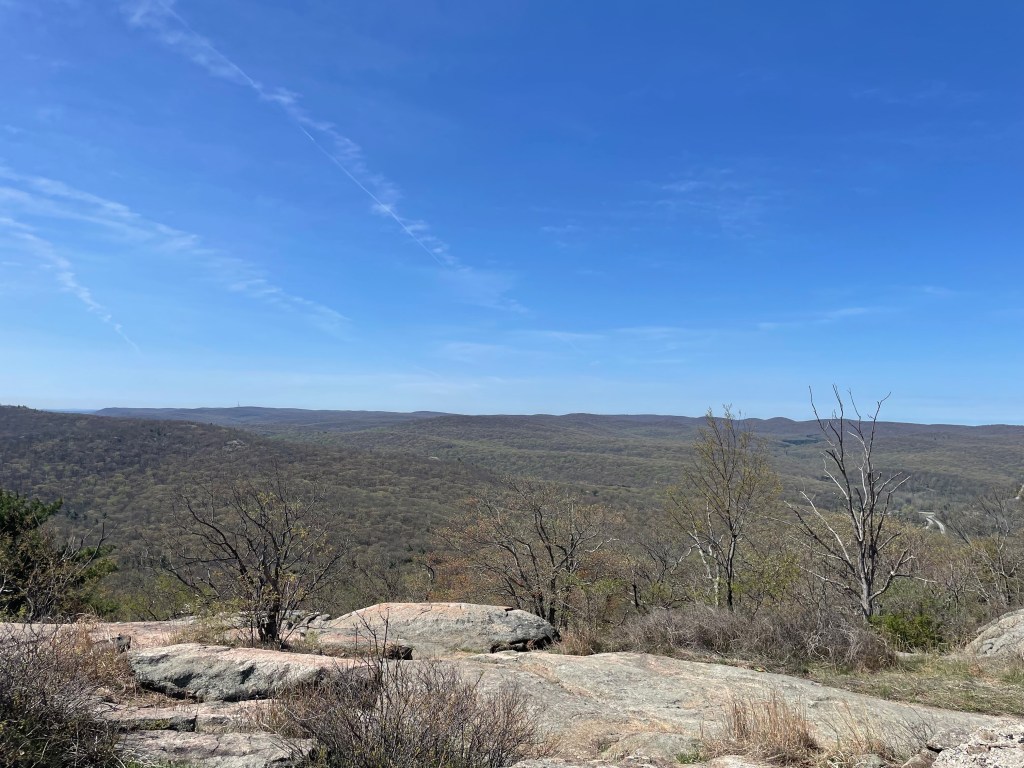
    The Scenic Trail Footpath in Minnewaska State Park is a hidden gem that shares some overlap with the Shawangunk Ridge Trail (SRT). It’s a rugged footpath that you don’t see written about very often, but it offers some of the most stunning, sweeping views of the valleys below.

    As part of a larger 12-mile hike through the park, I recently adventured down the section of the trail that connects Lake Awosting to Castle Point. I’ve also separately tackled the section that cuts out toward Mud Pond.

    It is a highly technical trail, but the payoff is well worth the effort. Taking long, steady-state miles like this through the park is proving to be the perfect programmatic complement to my current high-intensity training block. Right now, I am balancing 3 dedicated rucking days a week with 3 total-body strength days, executing the Athlean-X Total Beaxst program (which I will dive into fully in a separate post).

    When you are training for massive ultra goals, these technical back-country footpaths are where the real resilience is built.
  • Anti-Virtual 8.2 Mile D-Day Challenge

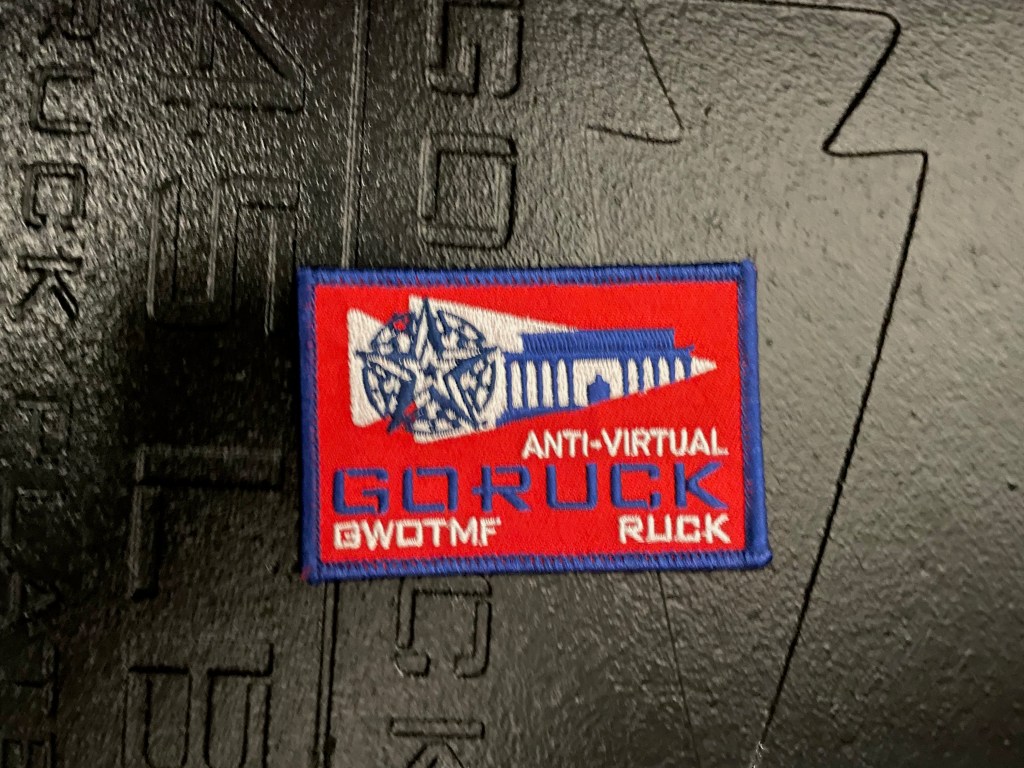
    In the month of May, I decided to test the waters with one of GORUCK’s cumulative events: the GWOT challenge, which required rucking 26.2 miles over the course of the month. While it was a fun way to dip back into consistent rucking, the fact that the mileage could be broken up into bite-sized pieces meant it wasn’t necessarily a true test of continuous rucking ability.

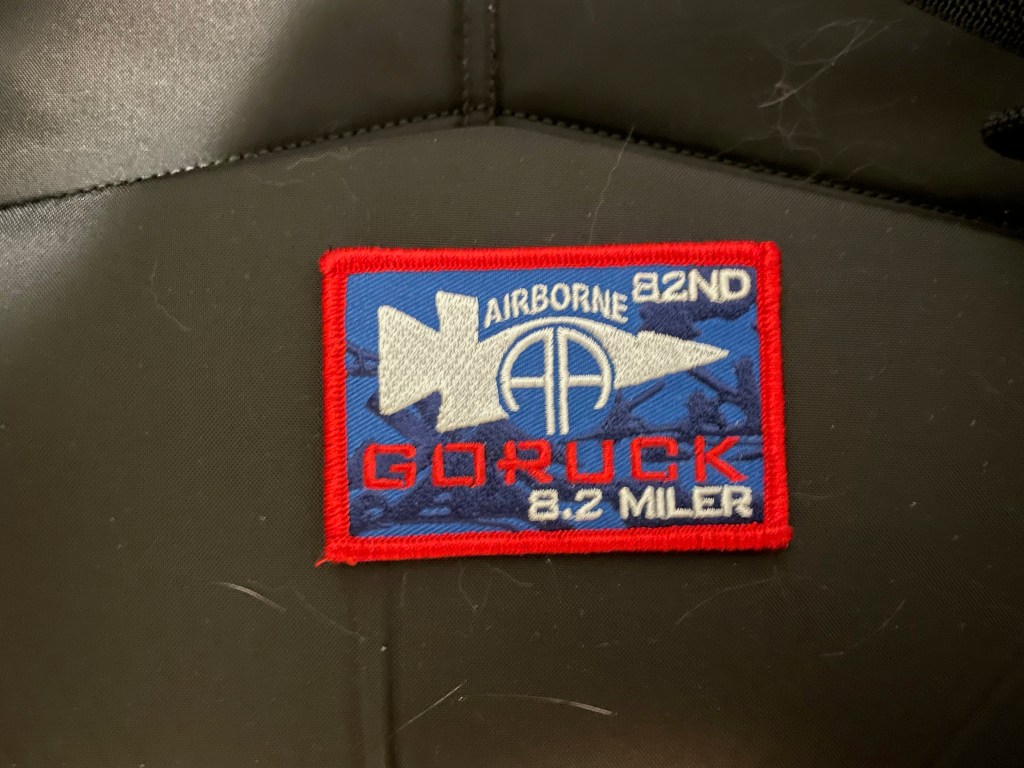
    To find that true test, I decided to close out my second cycle of Boring But Big by stepping up to the GORUCK 8.2-Mile D-Day Challenge.

    This event dialed up the intensity significantly: rucking a 45lb plate for 8.2 miles for time. To make it a legitimate stress test, I selected a brutal local course featuring 2,100 feet of continuous elevation gain and loss with an average grade of 14%.

    While fighting that extreme grade meant my overall velocity was slower than standard flat-ground GORUCK time targets, I managed to cross the finish line in about 2 hours and 50 minutes. Those final laps up the steepest hills were absolute killers, turning this into one of the hardest single-day endurance challenges I have ever completed—which made earning the finish entirely worth it.

    This experience solidified my preference for single-day events. There is simply no way to break them up or dilute the work; you either have the capacity to endure the acute stress in one shot, or you don’t.

  • GORUCK GWOT Anti-Virtual Challenge

    Since I decided to lean into rucking as my primary zone 2 cardio going forward, I figured a fun way to start would be to take a look at some of the anti-virtual challenges that GORUCK offers.  It is a fun way to dip my toes into what a GORUCK endurance event would be like and a great way to add a little variety to my upcoming training blocks.  As I ran my Boring But Big blocks combined with rucking I decided to commit to the GORUCK Global War on Terrorism charity challenge that involved having to ruck 26.2 cumulative miles over the course of the month of May.  I find having a near term goal in mind (that supports my long-term goals) is a great way to stay motivated and demonstrate that your training is accomplishing something.  I did most rucks for the challenge with a 30lb pack and managed to cover the distance with time in the month to spare. I enjoyed the experience and earned my first of what will hopefully soon be many GoRuck patches. 

  • Ultrarucker, Not Ultrarunner

    It’s been a while since I last posted, but not because I haven’t been training. Instead, I’ve been doing some deep reflection on how I approach my ultra training. For a long time, I’ve tried to fit myself into the traditional ultrarunner mold. But despite successfully completing a respectable number of 50Ks and trail marathons, I never really succeeded in becoming a good runner.

    What I did notice, however, is that with each training block, I became a stronger and more resilient hiker. I really enjoy rucking, and it has always been a core part of my routine. I’ve finally decided to stop spending cycles trying to become something I’m not, embrace the fact that I am a solid rucker rather than a poor runner, and lean heavily into ultra-distance rucking. Looking back, that’s effectively what I’ve always ended up doing anyway—each of those past ultras was power-hiked with a backpack full of gear.

    To test this pivot, I spent the last six weeks running two cycles of 5/3/1 Boring But Big alongside frequent rucks with a 30lb pack. The results spoke for themselves: my strength metrics went up, and the combination turned out to be incredibly recoverable. Traditional running always left my joints feeling beat up, but covering the same distance with a 30lb plate feels entirely sustainable. It’s time to stop chasing a running standard that doesn’t fit my frame and start leaning into my actual strengths.

  • Summiting Bear Mountain

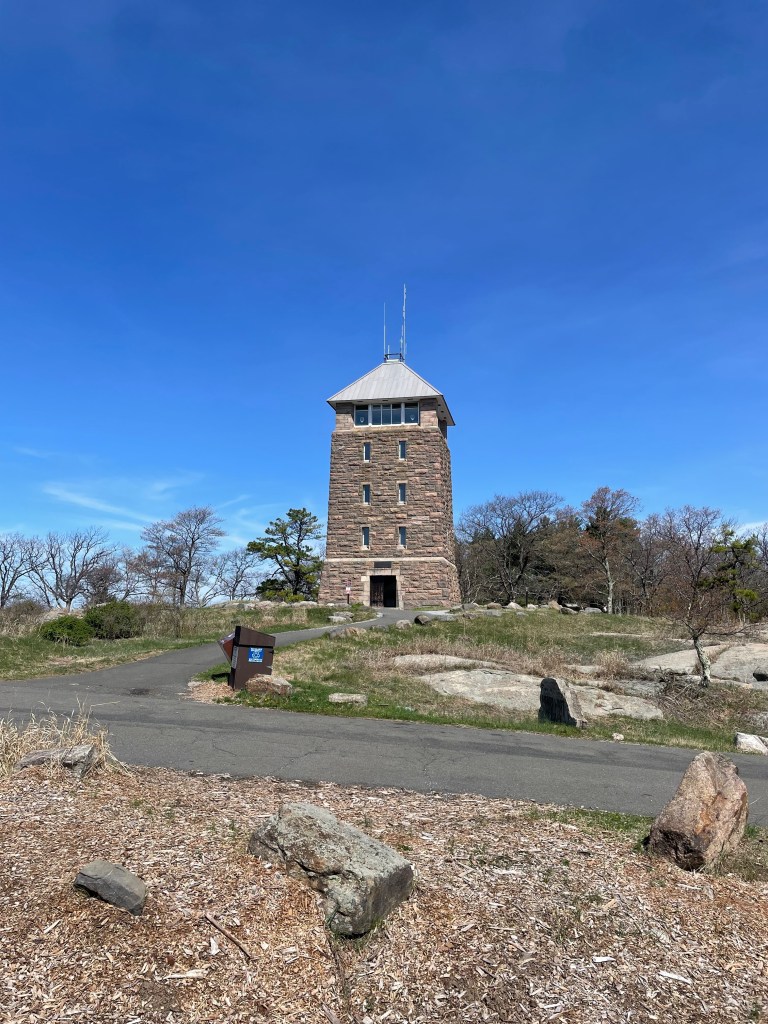
    Now that the weather is getting nice it was time to put all those MTI step ups and squats in my recent runs of 1000% Awesome to the test and an enjoyable way to do that was to take the Appalachian trail from the Bear Mountain Inn up to the summit of Bear Mountain.  While far from the most challenging summit I have ever done it is a fun one that I do a few times each year, usually in the early spring or late fall before the crowds descend on the park. 

    The top of the mountain offers a lookout tower and a spectacular view of the Hudson valley on a clear day. It’s a roughly a 4 mile round trip hike and makes for a nice quick morning or afternoon adventure.  It was a great way to put my training to test and I could feel how much all those step ups paid off.  I set a PR getting to the top without even trying for one.  It was a great way to start what will hopefully be a year full of adventures.

  • 1000% Awesome

    I’ve run a lot of different workout programs over the years and have used programs from AthleanX, Mountain Tactical Institute, Tactical Barbell, and 531 to support my ultra running goals. For general physical fitness AthleanX is my go to as the programs do a great job of incorporating athleticism and corrective exercises into every program. For specialty blocks I do enjoy incorporating programs from MTI into my calendar, but they can be challenging to run long term.  Tactical Barbell is a system I have really benefited from reading the books on and the advice in the books has been invaluable for how to combine heavy lifting with endurance work.  I do find the templates as laid out a bit minimalistic for my taste though as my body seems to respond much better when incorporating accessory work.  Tactical Barbell mentions in the book that you can substitute any of its templates for any other similarly laid out strength program, however, while still making use of its conditioning protocols.  This is the avenue I am choosing to take right now.

    Since the weather is warming up and supports running outside again, I am currently seeking to run an aerobic base building block like the Capacity protocol laid out in the Tactical Barbell Green Protocol Book, but with a strength program that allows for more accessories.  I have thus chosen to run the 531 1000% Awesome program template which is a 3-day strength template designed to allow for heavy conditioning work to be done in conjunction with it.  I’m in week 2 of my first three week block and really enjoying it.  I am seeing all the work put into doing step ups, power cleans, and good mornings from when I ran Helen starting to translate into increased maxes in my deadlift and squat based on estimates from the AMRAP sets conducted each week.  For accessories I have been performing 50 lunges, 50 dips, and 35 pull-ups each session.  I see myself continuing this program for a few cycles to build some additional strength while continuing to work on my aerobic base. 

  • Interesting Running Partner

    I always try to squeeze a walk, run or ruck in wherever I can and I especially try to make a point of it whenever I travel.  While a recent business trip to an Orlando suburb didn’t really leave me any time to explore, I did manage to get a couple of miles in going between the hotel and conference center.

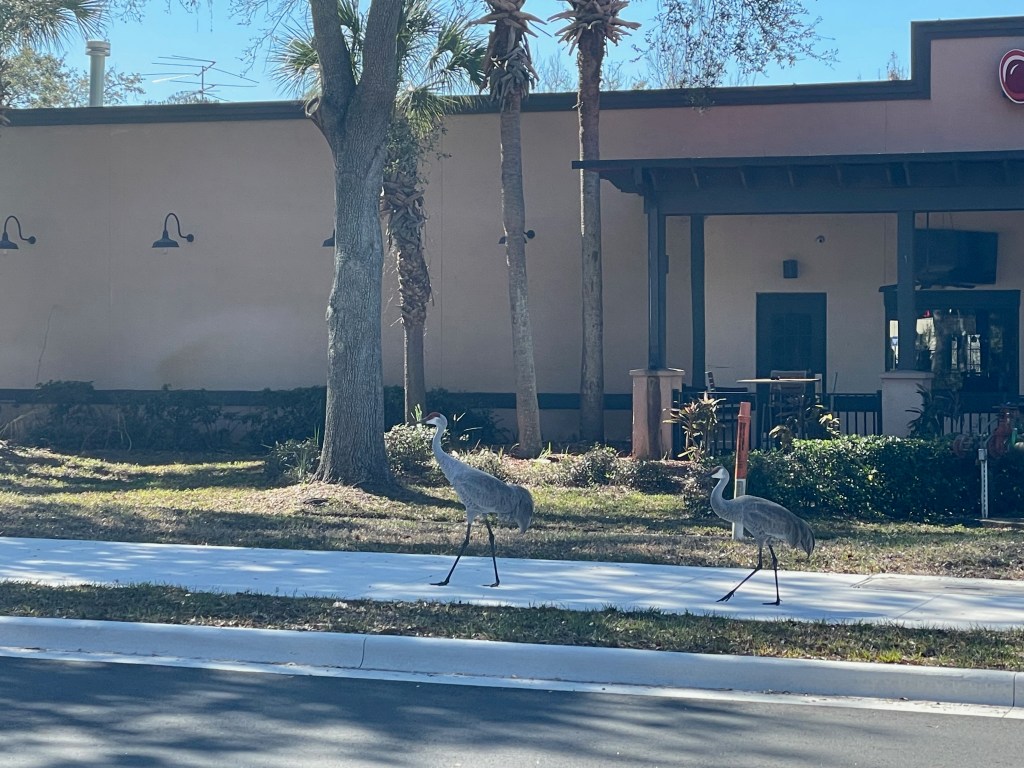
    Over the years, I’ve encountered an array of animals on various trails such as snakes, deer and foxes.  I even saw a moose once hiking in Vermont and a black bear in the Catskills.  This was the first time, however, that I encountered a pair of Sandhill Cranes running down the street parallel to me. 

  • MTI Helen Final Thoughts

    This was a plan I really enjoyed.  It definitely made me a more durable mountain athlete and I do feel more powerful going uphill after 3 months of doing programs with weighted step ups. The specificity of the program was great and it made for a great off season block to get through what has been a very snowy winter so far. 

    In terms of the strength training, I’m not expecting to break any PRs after running the training block but I do feel like I am better able to repeatedly express the strength I have in a functional way.  What I mean by that is my 1RM max overhead press probably did not go up but getting an extra rep or two into each set at 80% was doable towards the end. 

    The most valuable part for me was the chassis integrity days.  I haven’t tested yet but I expect to find that this program nicely set the stage for some improvements in my squat and deadlift.  After all those sandbag get ups, power cleans, good mornings, and deadlifts I’ve seen improvements in bracing my core.  This was a great program and I look forward to others in the series. 

  • The Failed Walking Pad Experiment

    After reading Born to Walk I was excited to start incorporating more walking into my daily routine and had acquired a walking pad which I was trying to use for a cumulative 2 hours a day while at my desk.  It seemed like a great way to up my training volume a bit without impacting other aspects of my life. Incorporating more walking into my routine did have definite benefits and I am keen to keep walking more every day.  However, I learned that I am not keen to keep doing it via a walking pad. 

    I found that in order to maintain the appropriate proximity to my desk so I could type, I had to stand at a distance from my desk that did not allow me to use my normal stride.  This was forcing me to alter my gait in a way that was just not natural for me and was leading to some minor soreness in the knees.  The soreness went away when I stopped using the walking pad and started walking again outdoors instead (my other training was unchanged).  So basically, I love the Born to Walk philosophy and see the value of the approach.  But, for me at least, a walking pad at my desk just didn’t turn out to be a viable way to execute on it. 

    Note: the walking pad in the absence of the desk seems fine. Getting the two to work together is where I experienced the issue. 

  • MTI Helen Initial Thoughts

    I’m in week 3 of the 1st of the Greek Heroine series of plans from Mountain Tactical Institute and I think this is a great plan for anyone that likes to hike, backpack, or run in the mountains.  While the plan is not without running speed work and plenty of weighted step ups to keep a level of sport specificity in the mix, it also has a nice mixture of strength and work capacity efforts to build endurance and resiliency in other ways.  From my impressions at the half way mark, the plan may not have you setting any running PRs by the end of it, but it does one important thing really well and that is improve your durability.  For me the endurance of the spinal erectors in my lower back has seen a huge benefit which will be great at maintaining good posture when I’m deep into a race.  The “chassis integrity” work in the program goes far beyond the core exercises you see in most fitness programs and will really help keep energy leaks plugged as the miles tick onward. 

    The program does contain a high volume of deadlifts and power cleans.  In addition to addressing a potential weakness in the endurance of my spinal erectors they did also point out one other area for improvement in terms of tightness in my hip flexors.  It’s not programmed for in the plan directly, but I needed to ensure the couch stretch was integrated into my daily routine to counteract the tightness which this program intensified.  This is not an issue with the program.  It’s a stretch I should have been doing everyday anyway as the issue has appeared before, and unfortunately let slide.  I’m looking forward to being a more durable mountain athlete by the end of the program and seeing where the other plans in the packet can take me.