Surviving Ultra

Because DFL is still an accomplishment

Author: Christopher Frenz

  • Planning the Next Adventure

    As an avid hiker and trail runner I am always on the lookout for interesting places to explore and there are a couple of ways I routinely seek out my next adventure. When seeking to explore a new area getting a trusted opinion of someone who has hiked the area before is usually the best bet but not always feasible.  When there is no one to ask, however, I have become a fan of using some apps/online research tools to identify trails that would interest me. The approach that I tend to use is as follows:

    1. AllTrails – This app has been around for a relatively long time and was one of the first hiking apps I can remember using, but it is an app that I find myself using less often as time goes on.  I think it is still a great resource to identify interesting areas to hike and run as you can view pictures of a trail and frequently read reviews of a given trail.  The downside to me is that you are only readily presented with a pre-canned list of routes with no easy way to create a custom route from point A to point B if it does not already exist. It’s great for ideas of where to go, but necessarily the best for planning how to see everything you want when you get there.
    2. Hiking Project – Hiking Project is an app that I find myself using more and more often for the role that AllTrails used to fill – finding an interesting area to explore.  I really like how they overlay pictures of different scenic views onto the map so you can figure out that you want to see these 3 sites off the blue trail and these 2 off of the red trail along with an idea of where they are on each trail.  It gives you a bit more granular insight into how you can make the most of your adventure.
    3. Komoot – this has become my go to app for route planning.  Once I identify an exciting area to explore using AllTrails or Hiking Project I will turn to Komoot to plan a route through the area.  This way I can easily see that in order to hit every site I want to see on my journey I need to start on the red trail and then switch to the blue and then finally take the yellow trail back to the start. I can layout a route that works for me and not just follow a pre-canned route created by someone else. I also really like the elevation profiles that they provide as part of the route planning. If I am training for a particular event I can try to find routes that will have similar elevation profiles to race day.
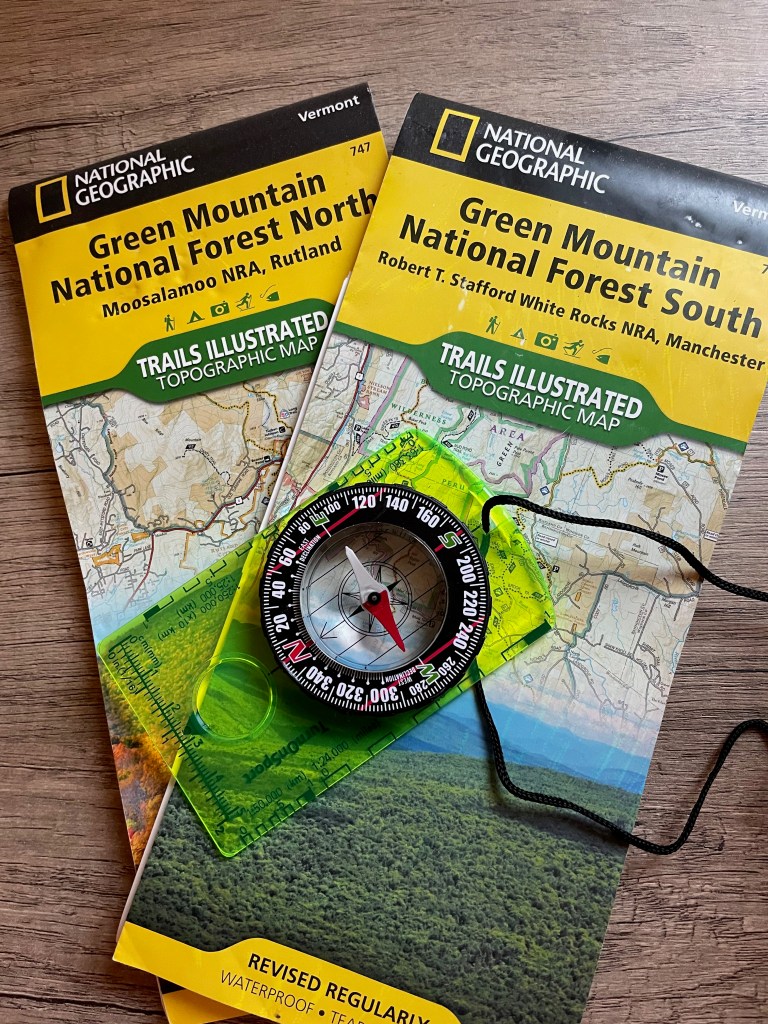
    4. Paper maps and compass – Not an app by any means but something I always like to keep handy.  GPS navigation is great and highly convenient, but things can occasionally go wrong – batteries die, signals can be poor, devices break, etc.  When this happens, you need to ensure that you have a way to navigate out if needed. While plasticized or laminated maps are best for the waterproofing, even without having the ability to purchase those it’s trivial to print off a map from one of the above apps to have a hard copy that you can store in some place where it will stay dry.  It adds negligible weight to your pack but is invaluable when the need arises. 
  • Yin Yoga for Recovery

    I’ve incorporated yoga workouts into my training for a while now, but recently have become a real fan of Yin yoga on my rest days as it has a focus on holding poses for an extended period of time to target the fascia and other connective tissues.  It’s a passive form of yoga and one that I have found to be highly restorative as releasing tension in the fascia helps to improve blood flow to the muscles which reduces soreness and promotes muscle recovery.

    Yin yoga is a form of yoga that I came across when researching ways to improve the flexibility of my hamstrings and hip flexor muscles like the psoas as a way of improving my running efficiency.  It was during this same research that I came across the stretch that I now love to hate – the couch stretch. 

    I haven’t been doing yin yoga for long, but so far it seems to be helping to overcome some flexibility plateaus I encountered with the more active forms of yoga I’ve tried in the past and I do feel it has improved my recovery. 

    I’m not a fan, however, of the deep stretches of yin yoga prior to any workouts and prefer a more dynamic set of mobility drills as a warmup on workout days.  It’s great on rest days though.

  • Base Building SE Initial Thoughts

    I am enjoying the SE cluster I chose for the Tactical Barbell Base Building phase which consists of:

    Dips

    Inverted Rows

    Goblet Squats

    KB Swings

    My logic behind each of these choices was that that I wanted each element of the cluster to cover a different movement pattern (push, pull, squat, and hinge) and that I wanted movements that would really challenge me to complete some of the higher rep schemes later in the SE phase while still giving myself at least a small chance to complete them unbroken (e.g. it won’t be easy but it may be feasible for me to complete 50 unbroken inverted rows, whereas 50 unbroken pullups is not within the realm of possibility for me right now).  I wanted it to be hard, but I think the unbroken set is important for maximizing the SE effect.  I also wanted to pick movements that would functionally translate to running an ultra-length OCR (e.g. dips to help push yourself over walls).

    I ran the sets as a circuit for the first time and think it is a circuit that will work well with my goals.  I performed the circuit in the order that I had it written out, but am thinking of making one minor change to the circuit to potentially squeeze out some more aerobic benefit.  I was thinking of changing the order of the exercises a bit to make it resemble a Peripheral Heart Action Training (PHAT) circuit (https://blog.nasm.org/certified-personal-trainer/peripheral-heart-action-training).  I first became introduced to the concept of PHAT circuits when I ran the AthleanX Built for Hollywood (https://athleanx.com/built-for-hollywood) program last winter to keep my conditioning up during the winter months in preparation for a 50K Spartan Trail Ultra and found they worked well for me.  They work by alternating between upper and lower body exercises to make the cardiovascular system have to work a bit harder to get blood to the areas of the body where it is needed and have been shown to result in aerobic capacity improvements.  Given the aerobic capacity goals of this phase I think for future sessions I’m going to instead runs this as:

    Dips

    Goblet Squats

    Inverted Rows

    KB Swings

    And see if I can eek out some additional cardiovascular benefits.

  • Base Building

    I came across the Tactical Barbell books about a year ago and enjoyed reading them but never actually ran one of the programs, although I did loosely try to incorporate some the approaches from the conditioning book.  Given I want to run a program that will still allow me to make strength gains but has a structured running component they seem like an ideal fit for my goals.  In particular I am interested in running the Green Protocol book phases this year, but want to try a smaller block of training first to see how it works for me before I embark upon a 9-month training journey. The Base Building phase described in Tactical Barbell II seems like an ideal way to give the system a try in a manner that is consistent with my goals.  Base building is an 8 week program template designed to build an aerobic and endurance base that can serve as the foundation for later training phases.  It starts with 5 weeks of strength endurance (SE) work alongside zone 2cardio, followed by 3 weeks of max strength (MS) sessions and a mix of HIIT and zone 2 cardio.  Base Building requires that you select exercise clusters to fill out the template. 

    For the SE portion of the training I have decided to use the following 4 exercises:

    • Dips
    • Inverted Rows
    • Goblet Squats
    • KB Swings

    and will run those exercises alongside zone 2 runs and rucks, where at least one zone 2 session each week will be a ruck with a 40-pound vest.

    For the MS sessions I’m going to use the cluster of:

    • Bench Press
    • Weighted Pullups
    • Back Squats
    • 50 KB swings as a finisher

    For the Zone 2 cardio I intend to use 60 minutes as the minimum session length for the “short run” days and 2 hours as the “long run” session minimum.  Now that the winter weather forecast looks manageable to regularly run outside again – here we go!

  • Deskbound

    This book is not directly related to Ultra running and one that I read more out of curiosity, but was a book that I found well worth the time and one that has actually benefited my training. The premise of the book is that extensive sitting causes all kinds of damage to the body and that sitting for hours on end is not healthy.  No real surprises there.  Where the value to the book comes in is with all the little prescriptions as to what to do to correct the damage caused by sitting as well as coverage of basics like how to stand properly and how to sit properly if you need to.  After many decades of life, which included a lot of standing, you would think I would be an expert by now.  Yet, I opted to give the bracing sequence in the book a try.  The bracing sequence is a series of steps to go through to ensure you are standing with proper spinal alignment and it turned out that there was one subtle way in which my posture was off.  If left unchecked, I had to tendency to stand with my right foot pointing a bit outwards which the book indicates can lead to stability issues and collapsed arches over time.  I started diligently trying to remember the bracing sequence and correcting this every time I was in a standing position.  My calf muscle was slightly sore for a couple of days and it took a few weeks for the corrected alignment to stick, but I’m glad I took the time to do so.  I used to get some minor soreness in my right knee after long runs, but the alignment correction seems to have helped correct that.  I’ve always been a fan of including corrective exercises into my routines, but the improvement I found here led to me making analyzing my running form a goal for this year.

  • Torched

    After finishing Train Like Bane as a wrap up to 3 strength focused months, it’s time to start focusing on turning the new-found strength into an increased work capacity and to top up my aerobic engine.  While, I was intending to do this with a more run and ruck centric training block, a quick look at the weather forecast still shows a lot of snow storms in my future over the next couple of weeks. Given the winter weather, I therefore decided to give the 1-month AthleanX Torched bonus program a try.  It’s a collection of conditionings greatest hits with days ranging from Zone 2 workouts to more intense cardio like Tabata circuits and barbell complexes.  I’m particularly intrigued by the weekly workout dedicated to Peripheral Heart Action Training (PHAT) where a circuit of exercises keeps alternating between the upper and lower body to make the cardiovascular system work harder.  I’ve had some of my best past endurance gains while running a PHAT circuits in conjunction with running and am excited to see a program that includes them.  A few days in and I’m already enjoying the program. 

  • A Self Reflection on Where I Stand

    With my current training phase coming to an end and a new 50 mile goal, it’s a great time to do some self-evaluation as to where I stand and where I need to go from here.  I need to really focus on improving the speed at which I can cover the distances and I think the flaw in my training until this point has been that I’ve always run to prep for a race but, if I’m honest with myself, I’ve never run enough and never really followed a structured running program.  On the strength side, while I made progress doing my own thing in the gym, I made much better progress once I started following a more structured training program.  I’ve relied far too much on being an avid hiker and having a high level of general physical preparation (GPP) to get me through the 50K distance.  Doing my own thing I turned myself into someone who is fit enough to complete an ultra, but not someone who is a true ultrarunner.  I will need to change that to step up in distance. I need to start taking a structured approach to running.  I think I will need to take a step backwards to ensure I have a strong enough foundation to make the leap forward to 50 miles.  I will lay out my thoughts and the approaches I will be taking in more detail in upcoming posts, but at a high level I intend to:

    1.  Find a structured running program that I can pair with the strength training that I am already doing.
    2. Take a look at my running mechanics and mobility to ensure I am able to cover the higher mileage I will likely need while keeping my risk of injury low. 

  • AthleanX Train Like Bane

    This week I’m coming to the end of my latest mesocycle in which I am wrapping up the month-long Train Like Bane bonus program from AthleanX.  I have really enjoyed programs from AthleanX over the years due to the athletic nature of the programs and they have worked to make me a much more well-rounded athlete.  While I typically lean towards programs that have a conditioning focus built in, this month-long bonus has been on my “really want to do” list for a while now and it was a program that I thoroughly enjoyed. It consisted of 3 total body workouts (Mon, Wed, and Fri) broken up by workouts focused on grip strength and calves on Tuesday and Thursday. 

    While not a typical ultrarunner type program, I am considering running another Spartan Ultra as a part of my journey towards 50 miles as I think I can benefit a lot from completing and improving my performance at a few more 50K events before attempting a step up in distance.  Repeating an event would also provide a way to gauge progress. I think the Bane program is great as a part of a Spartan Ultra preparation block in that the grip strength and pull strength focus could be beneficial in a lot of the obstacles. I was able to mix in zone 2 cardio on the grip strength and calf days as well to maintain my aerobic base while I ran the month-long program.  It was fun and rewarding program to run over the off season. Moreover, all of the grave diggers on each Wednesday’s workout helped me to break through a plateau in my overhead press.

  • How It All Began

    While I was always athletic, running was something that I dreaded doing for the first 30+ years of my life.  I was an athlete that was described as strong, powerful, and other like terms but never one that was associated with any of the qualities that one typically attributes to a long-distance runner.  The idea of running a 5K, let alone an ultramarathon, seemed an unreachable goal.  Until one day when I decided to actually give running a try.  I was overzealous and my pace way too fast but I managed to push myself for a mile before succumbing to breathlessness.  The next day I set out to do the same thing again and I made it further.  This got my competitive side intrigued and made me start to wonder, how far could I go if I kept this up for a few weeks?  Of course, trying to set a PR every day is not long-term sustainable, but by the time I reached that point it had become a habit and I looked forward to going for a run. It had become a form of moving meditation for me that I could use to let the stress of the day fade away and find solutions to elusive problems. A habit I kept up and eventually ran a number of 5K, 10K, and half marathon length races.  Although anything longer than a half marathon still seemed like an impossibility. 

    The sport of OCR than began to become more prominent and I, more importantly, formed a group with a few friends that would do the events (primarily Spartan races) together.  We started with the Sprint and moved up to Super, which got us curious – could we tackle a Beast?  As the distance got longer, the group grew smaller but pretty soon a few of us had conquered the Beast?  Could we do the Ultra? 

    While the group was very small at this point, it turned out that a couple of us could.  At that point, it was by far the hardest thing I had done athletically and even though there were times during the event I swore I would never do such a crazy thing again, the reality was I became hooked.  I have since gone on to complete two more 50K Ultramarathons and am yearning for the bigger challenge of a 50 miler.  Just one problem – I’m a back of the back runner who will need to up his running game. This blog is my reflections on how I approach and overcome challenges as I progress towards 50 miles (while still trying to improve strength) in the hopes that it helps someone else.